


Photojournalism
When I started yearbook, I had never even used a camera; a DSLR might as well have been a foreign language. Since then, I’ve become an avid Canon mirrorless R5 and 70-200mm sports lens enthusiast.

Adobe Lightroom now feels like a second language, and I’ve grown to love photojournalistic photography for its power to tell stories. When I see a moment, my first instinct is, "I want to capture this.
Feature Photography
 |  |  |  |
|---|---|---|---|
 |  |  |  |
 |  |  |  |
 |  |  |  |
 |  |
Funny enough, some of my favorite feature photos weren’t even taken for an assignment or my own page. They were just for fun or to help a friend. Ironically, those spontaneous moments produced some of the best photos I’ve ever taken, even though photography isn’t necessarily my strong suit.
I used to think great shots came from carefully composed, perfectly timed clicks. Having a mindset of helping a friend made me less nervous about getting "the shot," and I wanted to take as many pictures as possible. But after recklessly filling my SD card with 600+ photos per event, I realized something: the best moments aren’t always obvious in real-time. You just keep shooting. Don’t pause too long—just press the shutter and let the moment happen. Then, dig through the chaos later to find that one frame that says it all.
Of course, I’m not saying take poorly framed shots for the sake of it, but I’ve learned the real value of patience. And not just in photography. Journalism teaches you to chase moments, but sometimes the real skill is knowing when to wait. Then comes the hardest part: sorting through 1,000 photos. It’s exhausting but always worth it.
Sports Feature Photography
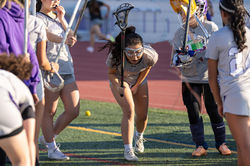
When I originally started taking photos, I avoided the bench, the student section, anything off the court. I thought the real action was only where the game was happening. But I’ve come to realize that athletes are often some of the most emotional people you'll find. Whether it’s a memorable win or a heartbreaking loss, they show it all.
Now, I make a point to take breaks from the game itself to capture what’s happening beyond the court. Sometimes the most powerful stories aren’t in the scoreboard because they’re in the sidelines, the huddle, or the quiet moment after the buzzer.
 |  |  |  |
|---|---|---|---|
 |  |  |  |
 |  |  |

Sports Action Photography
Unfortunately, I fell victim to one of the most common signs of weak photography: single-person shots with no action. At first, I didn’t realize it, but those photos felt flat and meaningless. There was no story, no context. Looking back, I think: what’s even going on in those shots?
By sophomore year, I wanted to redeem myself. I made it a priority to take photos that people would actually care about—because visuals are often the first thing viewers see. My mindset shifted. I started priding myself on capturing moments that told a story.
My technique? Always look for the ball and follow it. Where the ball goes, the story follows. I've come to appreciate the beauty of freezing the action, capturing a moment that holds emotion, movement, and meaning. Wherever the ball goes, I follow it.
I've realized how important it is to take great photos, because the best ones make people say, "Oh yeah, I remember that." That’s the goal: to bring people back to the moment.
This sample of photography includes a variety of people, not just players, to tell the full story of the game. It’s about more than just the score because it’s about the emotion, the action, the energy.
 |  |  |  |
|---|---|---|---|
 |  |  |  |
 |  |  |  |
 |  |  | |
 |  |
My Journey


Application is no longer available.
Over three years in photojournalism, I’ve learned that not every photo starts off perfect. One of my proudest moments was restoring a nearly pitch-black photo into a vibrant, usable image. Along the way, I’ve built a foundation in photography fundamentals, like angles and ISO, and became proficient in Adobe Lightroom. I created a resource guide to help my staff learn the software more efficiently.
My Progression


Girls XC 2022-2023
Girls XC 2024-2025
When someone looks at a spread, the photos are what draw them in first. My first page, Girls Cross Country, was far from perfect. The shots were poorly framed, the colors clashed, and the moments I captured lacked strong action. As Editor-in-Chief now, I would never approve those photos, but that’s exactly why it was valuable. That early mistake taught me to think critically about timing, composition, and how to capture dynamic action with multiple subjects. It also pushed me to learn the technical side, like shooting with low ISO in daylight, and sparked my growth as a photographer

JV Boys Basketball 2022-2023
.png)
Varsity Boys Basketball 2023-2024
After cross country, basketball season felt like a chance at redemption. I started paying more attention to composition and cropping, but my photos still lacked variety. Many photos were single-subject shots with players holding the ball but not doing much. My favorite image showed interaction with the coach, which made me realize how much more powerful storytelling could be. By sophomore year, I committed to improving. I attended eight games, capturing not just action but also sports features: cheers, coaches, and sideline moments. I explored every angle, from the bleachers to under the rim. The shift, sparked by the repetitiveness of my JV boys basketball page, made me a more intentional and dynamic photographer.